Science Whistling Past the Grave of the Unknown God
A mother wakes in the still night, her chest pounding. At that very hour—seven thousand miles away—her son bleeds into the dust of a battlefield. Later she will learn the hour was the same.
A dog, lost for months, half-starved, turns up on the doorstep of his beloved master after crossing a thousand miles of country it had never seen.
Identical twins, separated at birth, discover they wear the same shirts, enjoy the same films, relish the same meals.
Scientists shake their heads and mutter: spooky.
But mathematics is no less haunted. Every circle is entangled with π, bound by an eternal covenant of line and curve. Every rhythm of financial growth obeys the exponential e, the sacrament of increase and decay. Every oscillation hums with i, the signature of hidden imaginary dimensions.
And then there is Euler’s identity: eiπ + 1 = 0, and Planks‘s energy const: E=hf. Scientifc creeds disguised as equations. Geometry, growth, unity, and nothingness—the whole universe woven into a breathless equation. Across a billion light-years it holds, faithfully unbroken. That is not mere calculation. That is dogma.
Physics adds its testimony. Einstein bristled at quantum entanglement, calling it spukhafte Fernwirkung—“spooky action at a distance.” Two particles, once joined, remain joined across galaxies. They keep their vow. He shook his head in disbelief that the cosmos celebrated a timeless liturgy to Fidelity.
And now—the indictment.
Science, in all its pride, pretends not to be a religion but actually is. Its temples are laboratories. Its altars are benches. Its tubes and beakers are chalices. Its vestments are white coats. Like the many blessed wafers raised at Mass, data replication is their Eucharist and ritual has made it a sacred sacrament. Peer review is their private Confession—laying bare one’s secrets before a mentor or circle of priests, seeking absolution and admission to the canon. Descartes’ cogito is their Apostle’s Creed—the first article of dogmatic experiential faith, endlessly repeated as the guarantor of knowledge. Their constants are revered relics, incorruptible and carried from shrine to shrine. Their martyrs are canonized: like the Curies, who unshuttered the invisible flame of radiation into the world, sacrificing their bodies like apostolic witnesses for a new invisible covenant.
And there were many other hermetic scientists, the sacrificial anchorites of the laboratory. They denied the ordinary instincts of the body—hunger for companionship, the drive for children, the solace of hearth and kin. They made themselves eunuchs for cosmic revelation, sacrificing flesh and blood for formulas and constants.
Newton, withdrawn and solitary, scorning the warmth of others, consumed by prophecy, alchemy, and the calculus of creation.
Edison, famed as the wizard of Menlo Park, yet known for his relentless focus that left little room for family or friendship, his life orbiting invention as a monk orbits prayer.
Tesla, brilliant and eccentric, sleeping little, eating less, whispering to his pigeons while dreaming of invisible currents that might girdle the earth.
The Curies, handling radioactive relics like holy bones, their bodies dissolving in slow martyrdom, childless on purpose.
Hawking, his body frail and paralyzed, yet his mind soaring across the fabric of time, prophesying of things to come.
Giordano Bruno — philosopher, cosmologist, mystic — who dared to speak of infinite worlds and a cosmos without center. Dragged before the Inquisition, he was offered mercy if only he would renounce his vision. But he refused. On February 17, 1600, in Rome’s Campo de’ Fiori, he was burned alive. His last words, according to witnesses, cut sharper than flame: “Perhaps you who pronounce this sentence are more afraid than I who receive it.” He died as a true martyr of cosmic revelation — not childless by accident, but consecrated by fire, offering his body for that Truth greater than himself.
https://plato.stanford.edu/entries/bruno/
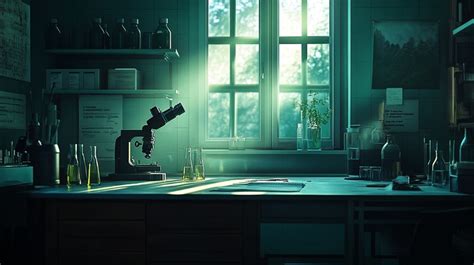
Countless Martyrs of Faith
And beyond them stand countless others—names half-remembered in textbooks, forgotten in patents, or buried in the footnotes of scientific journals. All of them starved in one way or another for the sake of cosmic revelation, denying ordinary carnal instincts so they could midwife eternal laws.
They were hermits, apostles, martyrs. Their bodily instincts denied, their generative power sublimated into another kind of conception. In their sterility they birthed constants, theorems, and revelations. Like desert monks fasting for God, they fasted for truth—and many died with no descendants but the granite equations that still faithfully govern the cosmos.
And still, when faced with the mystery of life, many scientists mutter the coward’s word: spooky. They will not confess that their laws are vows, their constants are sacraments, their experiments are acts of faith. They whistle past the grave of mystery, afraid to admit that their own faith is the very firmament beneath their feet.
For what is faith but—the trust that biochemical or psychological bonds hold, that elemental creation keeps its promises forever, that every circle is bound to the π ratio, every mother is linked to her child, that entangled photons always correlate … sacred covenants discovered by apostles of science, martyrs even unto death.
Science mocks faith. Religion pretends it. Yet both compete before the same altar. Both are worshipping an Unknown God. Science kneels to Constants. Religion names its Creator. But the reality is one and the same: the universe slowly reveals its truths through devotion—and neither priest nor physicist can finally say why.
Spooky is the coward’s word for the mystery of faith.
 THE TRIQUETRA OF LIFE: Wisdom, Wealth, and Wellness
Leave a comment