
When a Degree Still Made Sense
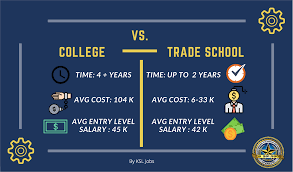
In 1963, my engineering degree from a small private college in New England cost about $2,000 a year — tuition, room, board, and books included. A four-year degree ran roughly $8,000. My first job paid almost the same amount. A year of work absorbed the full cost of a B.S. degree.
No debt. No drag on early adulthood. No worries.
Today? That same degree costs four times what it should, at about $60,000 for tuition and $20,000 for living expenses. A new graduate engineer’s salary would have to be $320,000 so it could absorb four years of tuition in one year’s wage, just as it did in 1963. But the average annual income today for a new graduate engineer is about $75,000.
That burden isn’t from our annual inflation — it’s from institutional bloat.
How Much Academic Knowledge Did I Actually Need?
After earning my B.S., I spent 10 years in electrical construction and 28 years as an electrical construction inspector. I used maybe one-tenth of one percent of what I learned in college. Its value wasn’t in memorizing Maxwell’s equations — it was in exercising the required discipline, logic, and perseverance. Ironically, those traits aren’t exclusive to universities.
A determined young apprentice with a good mentor can acquire those same essential benefits without the burden of a $320,000 bill. There’s a long list of ‘college dropouts’ or ‘never attended’ who became billionaires applying these same traits, like Bill Gates, Steve Jobs, or Larry Ellis; while in the media arts, Oprah Winfrey, Walt Disney, Clint Eastwood, and many more. As for the literary world, well … the list is lengthy, including such as William Shakespeare, Charles Dickens, Mark Twain, and Ray Bradbury.
So you don’t need a six-figure debt to become a disciplined, successful tech entrepreneur, movie actor, or a famous author of classic literature.
A university degree usually signals persevering discipline more than special skills. These days, technical skills change with such rapidity that an engineering degree is often outmoded in a couple of years or less.
The Path We Undervalued Back Then
Vocational fields — once shunned — now out-earn many white-collar careers. A master auto technician can make over $100,000. Electricians, welders, HVAC techs, machinists, and diesel mechanics regularly reach six figures by their early twenties. They earn while learning, without sinking into long term debt.
So why do college expenses now resemble a mortgage for a half-million-dollar house?
The Average 3.5% Inflation during those 60 years Didn’t Cause This
The polite explanation — “administrative staff growth,” “all-emcompassing student services,” “advanced research facilities” — only describes symptoms. The real cause began after World War II, when the federal government turned STEM universities into assembly lines for increasing international dominance through advancements in all fields of science
The Global Tech Race Behind the Bloat
The atomic bomb and the space race convinced Washington that scientific knowledge would determine global supremacy. Universities with strong engineering programs became:
- research labs for defense
- pipelines for aerospace and computing
- innovation hubs meant to outpace the Soviet Union
Federal dollars poured into not just MIT and Caltech, but so-called liberal arts colleges like Harvard and Yale. New buildings, advanced labs, compliance offices, mental-health centers, diversity offices, marketing teams, and grant managers — an entire academic bureaucracy ballooned. The incentive was international dominance; the result was institutional dependence on research money.
The boom ran on federal research funding, backed not by internal revenue … not by real economic income … but by Treasury dollars adding more zeroes with a keystroke, increasing our national debt to $38 trillion.
When the Cold War ended, the race simply shifted to China — AI, biotech, quantum computing, cyberwarfare, semiconductors. Universities kept growing because research dollars kept flowing.
Who Pays for This Global Competition
Students. Families. Taxpayers. Tuition rises not because of inflation but because expanding institutions must feed their vast administrative machinery. In 1960, a university was mostly professors who could teach. By 2025, it has become an army of academic deans in gilded regalia.
The New Reality
For today’s young adults, the old promises no longer hold. Many college graduates spend years trying to claw back to a net worth of zero. These same grads are shy of commitments like buying a house or raising kids.
Meanwhile:
- electricians hit six figures by twenty-two
- machinists can buy homes by twenty-five
- welders out-earn many engineers
- diesel techs start businesses before thirty
A recent NBC News poll found that 63% of Americans believe a four-year college degree is not worth the cost, citing reasons such as a lack of specific job skills upon graduation and high student debt. This sentiment reflects a significant shift in public opinion, as 12 years ago, 53% of respondents in the same poll viewed a degree as worthwhile. This decline in perceived value is linked to rising college tuition costs and economic changes. Other sources (LinkedIn)report that only 41% of professionals believe a college degree is necessary for a successful career.
This isn’t an argument against higher education in the arts and sciences, but it warns of imposing excessive financial burden with limited benefits.
Who the Future Belongs To
The future belongs to those who choose wisely:
- competent tradespeople
- perservering apprentices
- bold, daring entrepreneurs
- skilled, visionary innovators
- disciplined, self-taught workers
For decades, institutions fattened themselves on federal dollars and unrealistic student dreams. Maybe the pendulum is swinging back from DEI toward meritorious competence, craftsmanship, and honest work.
A Final Word
If the old system collapses under its own weight, that may be overdue. Universities forgot their mission — teaching — becoming prestigious machines chasing research money and pushing students to lifelong debt.
The next generation won’t be saved by such bloated institutions. It will be saved by skill, discipline, courage, and competence — the qualities that built this country long before a college degree became a luxury item.
If young people choose practical paths that restore dignity and financial freedom, then perhaps the real miracle will be avoiding that old, bloated system — and prospering once liberated from it.
| Title & Source | What It Shows / Why Useful |
| American Council of Trustees and Alumni (ACTA) — “The Cost of Excess” | Documents how administrative (non-instructional) spending has risen dramatically and correlates with tuition increases. American Council of Trustees and Alumni+1 |
| Progressive Policy Institute — “How to Cut Administrative Bloat at U.S. Colleges” (2023) | Uses data to show that at some top universities there are more non-faculty staff than students, illustrating the “bloat” you describe. Progressive Policy Institute |
| American Progress — “Recent Trends in the Cost of College” (2025) | Offers a broad view of tuition growth over decades — especially useful when you contrast the 1960s cost to today. Center for American Progress |
| Heritage Foundation — “Administrative Bloat at Universities Raises Costs Without Helping Students” (2021 commentary) | Argues that rising administrative overhead drives tuition upward, often with little benefit to educational quality or student services. The Heritage Foundation |
If you’d like more insights, visit RMDellOrfanoAuthor.com under the blog category … Education or Politics, where conscience, culture, and spirit intersect. Then reference it to those who might be interested.

 THE TRIQUETRA OF LIFE: Wisdom, Wealth, and Wellness
Leave a comment