
Why the Repair Manual Must be Lived
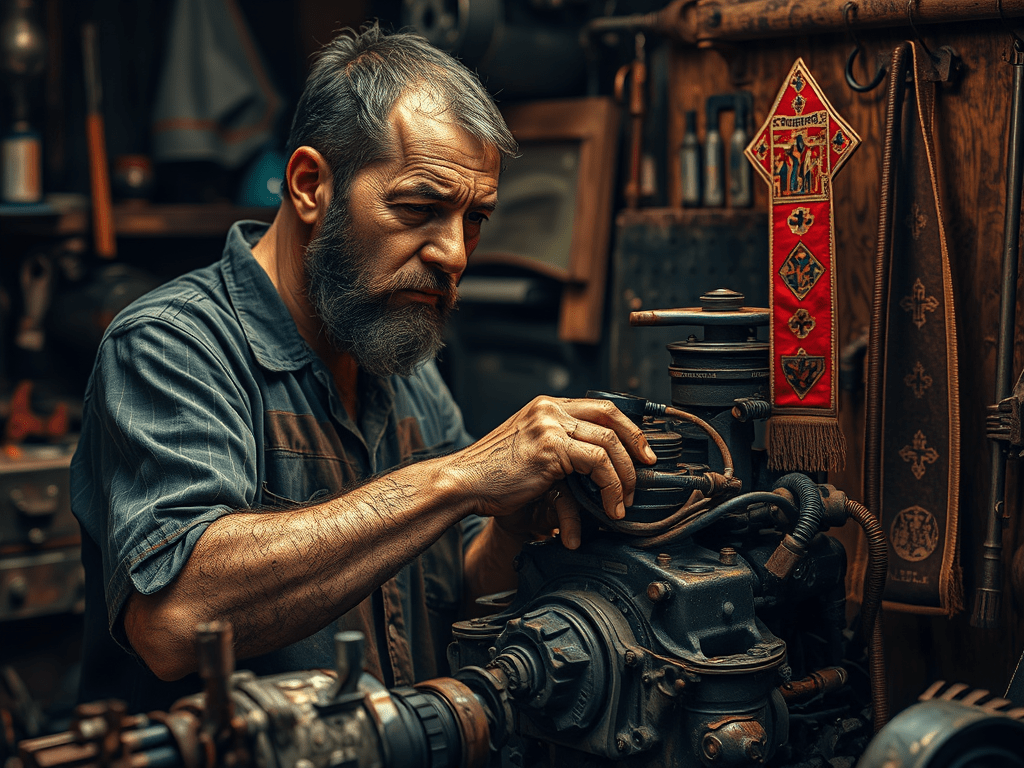
You can read a service manual on renovating a gasoline engine cover to cover — torque specs memorized, diagrams understood, procedures clear on paper. But until your hands are black with oil, a bolt snaps, a gasket leaks, and the engine refuses to turn over, you don’t actually know the machine. The knowledge remains intellectual and oddly distant, like maps for a country you’ve never visited.
Only when resistance shows up—stripped threads, seized parts, sweat running into your eyes — do you move from manual theory into handled reality. You learn what really matters, what can’t be skipped, and what shortcuts always fail. The engine teaches you, not the instruction manual.
Scripture is no different.
You can read it fluently, memorize and quote it accurately, even teach it persuasively — and still miss its wrenching force entirely. Until we live it facing mortal threats, it remains abstract. An instructive but inert manual.
Obedience to Scripture renovates the Beast — the engine within — that remains unmastered until entered, resisted, and known at its depths.
Monastics have always understood this. Strict obedience to work and prayer catabolizes the soul. It breaks down what is wild and undisciplined inside us, not to destroy it, but to heal it — until what once ruled us at will through those seven deadly sins is fully mastered and made whole.
St. Francis of Assisi grasped this academic danger with particular clarity. He was reluctant to allow book study among his friars, not because he despised learning, but because he feared its misuse. He knew how easily texts could become a paper substitute for sanctity—how scrupulous study could replace obedience, commentary replace conversion, and words replace wounds. For Francis, the Gospel was not merely to be analyzed, but enacted—barefoot, hungry, exposed, and dependent.
In the early Church, even those in authority submitted to this same teardown. Bishops would don sackcloth and sat in ashes, not as theater, but as repair work. Hierarchy was not shielded from repentance; it was exposed to it. Public abasement was understood as maintenance of the soul—the necessary stripping of regalia that allowed authority to work under the hood, kneeling to recover every nut and bolt of the Beast.
Sackcloth and ashes were not symbols of shame; they were the work clothes of early bishops entrusted with the Church’s vital machinery, unafraid of getting dirty to fix it.
The early Jesuits understood this with equal seriousness. They did not train novices by having them merely read about Christ’s sacrifice. They subjected recruits to silence, isolation, exhaustion, deprivation, fasting, prayer, and obedience under severe battle strain. The primordial self was dismantled deliberately, then carefully rebuilt. Only such a spiritual reformation allowed men to endure humiliation, savage trials, painful torture, and even gruesome death—without losing coherence or faith.
Among the missions in early Canada, some of these men were forced to run ritual gauntlets—stripped, beaten, burned, mocked—their torment prolonged to break the will before the body. Yet, native witnesses recorded something unexpected: the Black Robes did not scream, curse, or strike a bargain. They prayed aloud for their tormentors and remained inwardly intact until the end. That unusual composure was not learned from books. It was the practiced result of lives already stripped and surrendered long before those gauntlets were run.
Reading about Christ’s suffering unto death would never have sufficed. Admiration is not a transformation. The Beast is not mastered by study, eloquence, or sentiment. It yields only when Scripture is inhabited— when the Word is driven deep into muscle, nerve, breath, and will.
“Pick up your cross and follow me” is not an idle trope. It marks where obedience stops being theoretical and becomes the Word made flesh.
No amount of book study can substitute for such enacted obedience — whether it be to an engine manual or the detailed demands of Scripture.
That is why true mastery is rare.
It is difficult to find an auto mechanic who has truly mastered engines—
or a priest, called to be Another Christ, who has mastered the Beast.
 THE TRIQUETRA OF LIFE: Wisdom, Wealth, and Wellness
Leave a comment