
A lifetime reflection on humanity’s dream of reaching Mars
The grand narrative of human space flight to the planet Mars stretches across my entire life, woven together by a bizarre chain of historical and personal milestones.
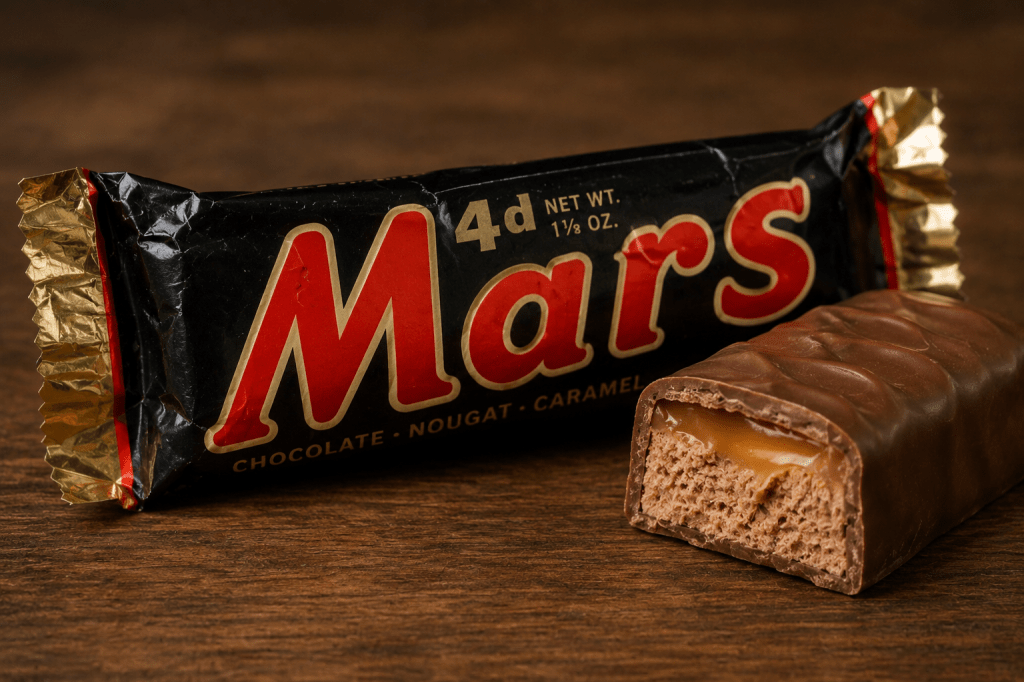
As a child, I loved munching on the original Mars candy bars. They were wrapped in glittering foil that caught the sunlight like lost treasure. Beneath the wrapper lay dense nougat, toasted almonds, and thick milk chocolate. To a young boy, it tasted as though heaven had already arrived.
At about the same time, I was devouring Jules Verne’s From the Earth to the Moon, following the adventures of three men launched into space inside a hollow projectile fired from a gigantic cannon. The story was wildly improbable, but it ignited something in me.
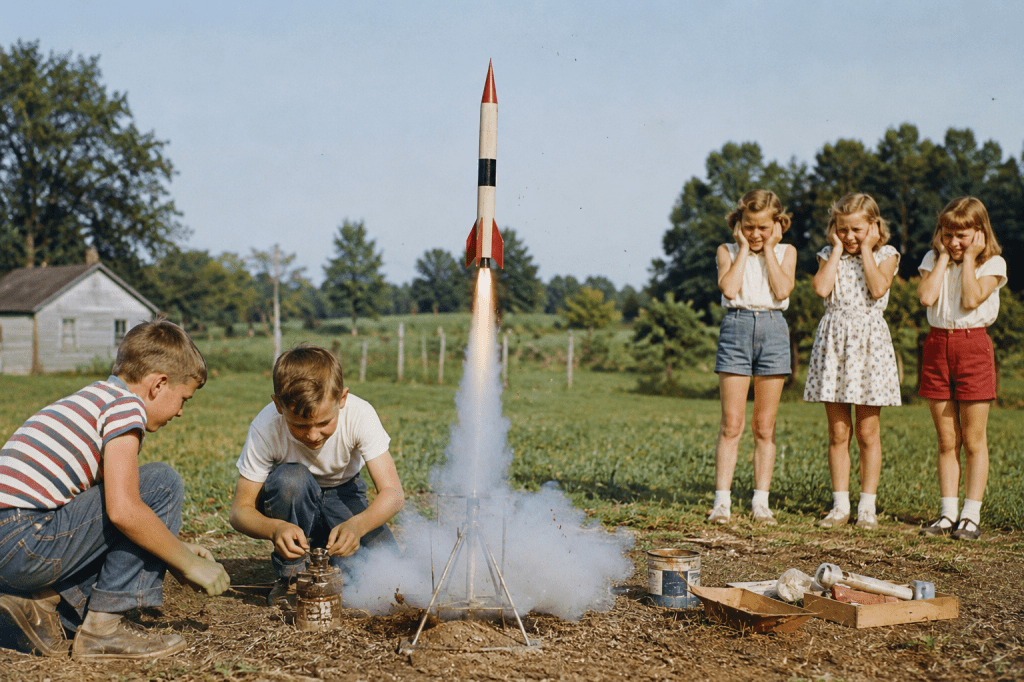
In the summer of 1954, my younger brother Billy nearly launched himself, me, and our family homestead into low Earth orbit. Armed with a volatile mixture of backyard curiosity and makeshift chemistry, he was determined to escape gravity’s grip.
Then came Sputnik. Its eerie beep-beep-beep echoed across the world and transformed science fiction into reality. The Space Race was underway, and my generation became captivated by the possibility of launching beyond Earth to the Moon and beyond.
In 1959, that fascination followed me into college at Worcester Polytechnic Institute. Decades earlier, Robert H. Goddard, the father of modern rocketry, had walked those exact same halls. His pioneering work with liquid-fueled rockets helped make space travel possible. Walking across campus, I felt connected to a dream that seemed both historic and inevitable.
Driven by that momentum in 1963, I threw myself into Yale graduate engineering studies aimed squarely at the disciplines NASA needed for the emerging space program. I fully expected my future to lie in rocket engineering science, perhaps even space travel.
Then history intervened with a gunshot in Dallas, Texas.
On November 22, 1963, the assassination of President John F. Kennedy—the very man who pushed for space travel—triggered a personal crisis that tragically shattered the trajectory I had imagined for myself. Yet what first appeared to be a breakdown became an unexpected breakthrough. The outward journey toward the stars gradually gave way to my own inward launch that would occupy much of my next decade. In a strange way, the thirst that had once drawn me toward outer space began to be satisfied by interior means.
In 1969, I stood alone in a pine forest strewn with thousands of obsidian crystals from prehistoric eruptions in La Primavera, Jalisco, Mexico. I was on my long pilgrimage searching for life’s purpose. I later learned that at that moment Apollo 11 astronauts stepped onto the Moon without me.
Seventy years later, in 2026, Elon Musk is building a fleet of towering stainless-steel Starships to do essentially the same thing on a corporate scale.
Today we live in the era of SpaceX, reusable rockets, billionaire survival bunkers, and serious plans for lunar bases and Martian cities. The technology has evolved from rusty backyard pipes to methane-fueled Raptor engines, but the impulse remains remarkably familiar: to build one more refuge against uncertainty, whether beneath a suburban backyard, in a remote billionaire compound, or eventually beneath the surface of Mars.
Looking back across seventy years, I no longer see separate events. I see a single continuous story. The same longing that inspired Jules Verne, Robert Goddard, Apollo, and Elon Musk continues to drive us forward. The human impulse behind exploration has not changed a bit.
After experiencing my own inward launch, one interpretive question yet remains:
Are we exploring—or are we escaping?
The Unforgiving Landlord
There is a sweet temptation in the dream of Mars colonization. It promises that a distant planet may somehow free us from the limitations that have always troubled life on Earth.
Mars offers no such bargain.
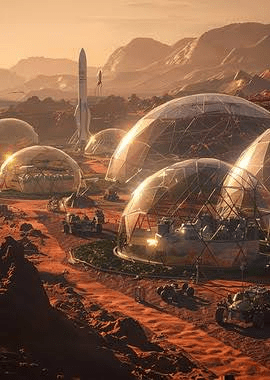
To survive there would require living underground in heavily shielded habitats, protected from potent radiation, cold, and a near-vacuum atmosphere composed primarily of 95.3% carbon dioxide. The planet demands extraordinary payments to keep a human being alive.
Without a substantial atmosphere or a global magnetic field, cosmic radiation continually bombards the surface. Low gravity slowly weakens the bones and muscles. Every vital necessity—air, water, food, shelter, heat, and medical care—must be engineered, maintained, and secured against failure such as random punctures from micrometeorites.
And let us suppose a colony survives for centuries. Future generations might adapt physically to their environment, becoming taller, lighter, and increasingly unable to tolerate Earth’s gravity. Over enough time, they could become a species distinct from the humans that first arrived, eventually appearing alien to us.
Yet one thing would remain unchanged.
The Unchanging Curriculum
Though living underground beneath Martian soil, children would still struggle with pride, envy, ambition, fear, love, loyalty, courage, selfishness, and sacrifice. They would still quarrel with neighbors, worry about their families, seek life’s meaning, pursue power, and wrestle with the same questions that have challenged humanity since the beginning.
The first child born on Mars would still need to learn honesty. The first teenager would still discover temptation. The first politician would still wrestle with ambition. The first lover would still risk heartbreak. The first parent would still fear loss. The first tribal nation might find Earthlings to be its enemy, precipitating a war between worlds.
The ancient human curriculum would remain exactly the same.
As I look back on the path that began with my munching on Mars Bars, reading Jules Verne, learning about Goddard and Sputnik, then having dreams of working at NASA, I find myself reaching a different conclusion than the one I expected in my youth.
Humanity may someday build thriving settlements on Mars, establish cities beneath domes, and travel routinely between planets. But the most difficult frontier I encountered was never millions of miles away. The greatest distance lies between who we are now and who we are called to become. It is inward bound and located right under our noses.
To escape the gravitational pull that keeps us worldly, the launch must occur deep within us—a Star Trek voyage to where few have gone before.
Discover more from THE TRIQUETRA OF LIFE: Wisdom, Wealth, and Wellness
Subscribe to get the latest posts sent to your email.
Published by the New Oxford Review, a conservative Roman Catholic peridodical
Richard M. DellOrfano spent ten years on a cross-country pilgrimage following Christ’s instruction to minister without possessions. He is completing his autobiography: Path Perilous, My Search for God and the Miraculous.


Leave a Reply