
If You Aren’t Whispering to Them.
On arriving home, I entered my dark and empty house, but managed to keep smiling over my new friends: Bogart, who kept hugging me for playing ball with him, and of course Eldon, for all the insightful rallies in that lively discussion of ours—a meeting of minds that felt like a quiet blessing before he took his leave from this life, much like my essay “Bogart’s Hug” describes in the New Oxford Review
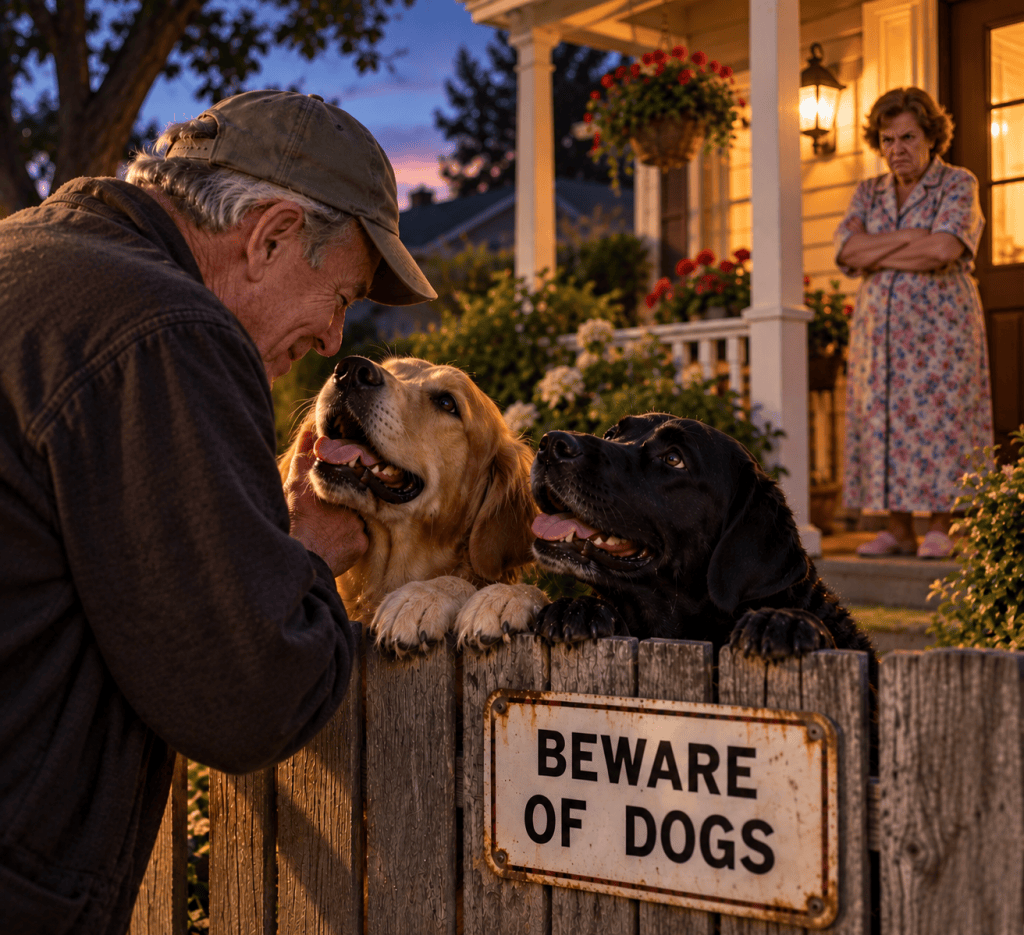
It is a curious thing, this sidewalk whisper that creates a bond. Years later, I find it waiting for me just down the street on my evening walks. Two dogs—grown from the mascot puppies that once thrust their paws through a yard fence—still track my steps through the dark, sensing me fifteen feet away before I even draw near. When I lean forward to whisper sweet nothings across the wire fence, they erupt into a joyous chorus, as if trying to speak to me, tails wagging as if greeting their Maker, completely unfazed by the household matron’s disapproving scowls from the porch. Not once, but every time I pass by, unlike other pedestrians who pass them.
I enter an empty house after my fitness walk and pretend my wife rushes to greet me, along with our dog. But I’m single and have no pet to bark up a storm over me. After dinner alone, I turn on a movie series, but it doesn’t fill that empty space inside. Somehow I’ve got to find inward solace where many do not. Maybe reading Scripture.
I smile over the two signs posted, “Beware of Dogs.” I offer them no treats, nor do I reach out to pet them. Yet in a world where whispered human intimacy can be rare and fleeting, their unrestrained devotion is a joyous prayer in the night. They put a smile on my face and a “Thank you, God,” for such an innocent pleasure. Whether it is a giant standard poodle offering a parting embrace, a kindred human spirit matching our wits in confiding whispers across an afternoon party table, or two neighborhood mutts turning my ordinary twilight stroll into a moment of pure grace, these close encounters remind a lonesome soul that the deepest bonds in life require no loud declarations, asking only for a gentle presence passing in the dark.
I can understand why more and more airport passengers carry stuffed animals under their arms. First it was that having children was too expensive, so they adopted dogs. Even that costs too much these days. Enter the warm, fuzzy, squeezable stuffed animal. But even stuffed pets will fail to fill the emptiness inside unless they whisper us comfort prayers.
Still, those two neighborhood dogs sure help bridge the gap.
And the best part is, I don’t have to feed them.
Which brings me to the issue of expense.
Why do we keep pets at all? A stuffed dog is far cheaper. It doesn’t need food, daily walks, vaccinations, or a dog tag. It won’t soil the carpet, bark at midnight, or eventually break your heart by dying—perhaps after an emergency veterinarian charges you an ungodly fee.
But a stuffed dog won’t look back at you while you’re whispering to it.
That answers the intriguing question of why human beings spend extraordinary amounts of money, time, and emotional energy maintaining living animal companions when a stuffed animal provides much of the visible form at virtually no expense.
A pet dog offers what a stuffed animal cannot provide: a living response. It recognizes you. It remembers you with dogged devotion because something passes between two living creatures.
The ancient Romans apparently understood that attachment. Snarling dogs appeared at their doorways with the words Cave canem—“Beware of the dog.” Their mythology went one better. Cerberus guarded the entrance to Hades. Dogs have apparently been standing between us and trouble for a very long time.
Perhaps no dog better demonstrates such devotion than Hachikō, the Japanese Akita who continued returning to Shibuya Station after his owner, Professor Hidesaburō Ueno, suddenly died in 1925. For nearly ten years, Hachikō continued looking for the man who would never return. His devotion became so famous that a bronze statue was erected at the station while Hachikō was still alive. When Hachikō died in 1935, he was buried beside his master.
A pet dog will defend you, even die for you. But perhaps what dogs guard us against most often is something less visible.
Loneliness.
Tomorrow evening, I’ll approach my two buddies behind that “Beware of Dogs” sign again. They’ll sense me coming through the darkness. I’ll lean toward the fence and whisper.
And they’ll answer.
Richard M. DellOrfano spent ten years on a cross-country pilgrimage following Christ’s instruction to minister without possessions. He is completing his autobiography:
Path Perilous, My Search for God and the Miraculous.
Leave a Comment. Don’t be shy.


Leave a Reply